
Corrosion causes losses amounting to billions every year. Therefore, a thorough specification of corrosion protection surface treatment can make a decisive difference in how strong your position is in a dispute. Below, we have listed a number of good tips for when you need to have your items painted.
Paint Specifications
Most often, when paint is used as a rust/corrosion-protective surface treatment, it is an industrial painter who performs the work. Before the work begins, you, as the client, specify the requirements for the finished product – this constitutes a paint specification, regardless of the level of detail or the size of the task.
In consultation with their paint supplier, the painter advises you on which paint system to apply. This part of the delivery requires a high degree of trust from your side – both in their expertise and their craftsmanship. The painter may also prepare a painting procedure for the work, subject to the client's approval, but this is almost exclusively seen for larger structures or construction projects.
If the items rust prematurely, if the paint peels off, or if, as a customer, you are simply not satisfied with the product returned from painting, a dispute may arise, and we sometimes get involved – especially if the case is not clear-cut. Some cases are strong with a good and precise paint specification, but we often see that only a corrosion category has been specified, requiring more assessment and argumentation to demonstrate that the delivered product does not meet the specified requirements.
Corrosion Categories
A corrosion category is solely a description of how aggressive/corrosive an environment the item is to be situated in. The corrosion categories are defined in ISO 9223:2012 and used in the field of paint in ISO 12944-2:2017. They are divided into atmospheric corrosion categories, ranging from the least corrosive environment C1 through C2, C3, C4, and C5 up to the extremely corrosive environment CX, and in immersed/buried environments, where the categories are Im1 to Im4. The corrosion category thus does not indicate how long the item must withstand this environment – this must be specified separately.
Durability
Durability is defined in DS/EN ISO 12944-1:2017 as the time the surface treatment must protect the item without major maintenance and not as a guarantee against minor corrosion during the specified period. Therefore, it is important to be clear about how often you wish to carry out extensive maintenance or replace the item.
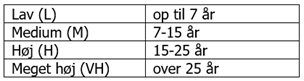
The painter and paint supplier compare the corrosion category and durability requirements to select the most suitable paint system for the item.
A specification with a corrosion category and a durability in accordance with DS/EN ISO 12944 can ensure that your item lasts as expected and that you are in a better position if a dispute arises.
However, there are many other factors that also significantly affect durability. Examples include: the cleanliness of the surface before painting, climatic conditions during the painting process, execution of the painting work, design of the item, the condition of joints, welds, and edges before pretreatment, and the substrate condition before pretreatment. Some are the painter’s responsibility, while others depend on how well the designer and manufacturer have prepared the item for painting.
Prevention of Disputes
By being thorough in your specification, it is possible to prevent disputes. This is especially beneficial when many parties are involved in the process (you as producer/manufacturer, industrial painter, and possibly multiple subcontractors). There are standards for specifying most of the factors affecting durability, thereby clarifying the final quality you desire.
Below are a few examples of errors that can significantly shorten the durability of corrosion protection.
Sharp Edges
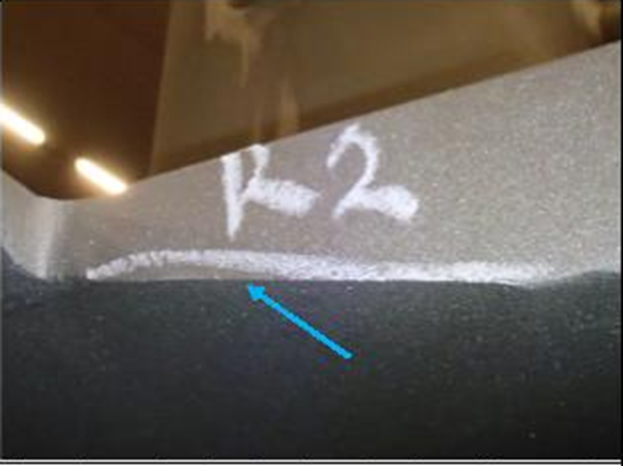
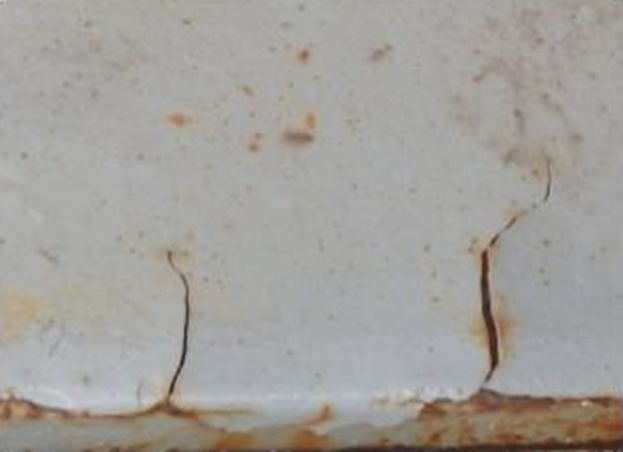
When paint is applied to an item with sharp edges, the wet paint retracts from the edge due to surface tension. This means the paint layer thickness at the sharp edge becomes very low, making the edge significantly less protected against corrosion than the rest of the item. This can lead to corrosion attacks, under-rusting, and paint peeling starting from the edge.
Note that the painter should not begin to use an angle grinder on the item – it is the manufacturer's responsibility to ensure the item is ready for pretreatment.
Lack of Control in the Painting Process
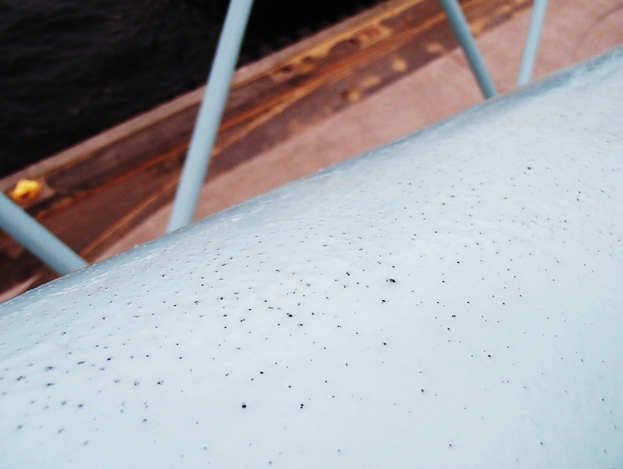
This example shows a surface where the polyurethane topcoat has bubbled and become damaged. One of two things went wrong: either the climate control during the painting process was insufficient, resulting in condensation on the surface during application of the polyurethane, which then reacted with water. Alternatively, the painters did not observe the overcoating interval, causing the polyurethane paint to react with residual hardener in the underlying epoxy. In both cases, air bubbles form in the paint, meaning everything must be blasted off and repainted.
Insufficient Pretreatment
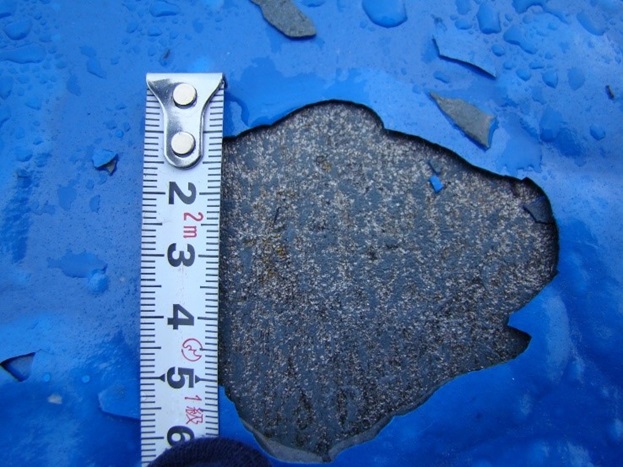
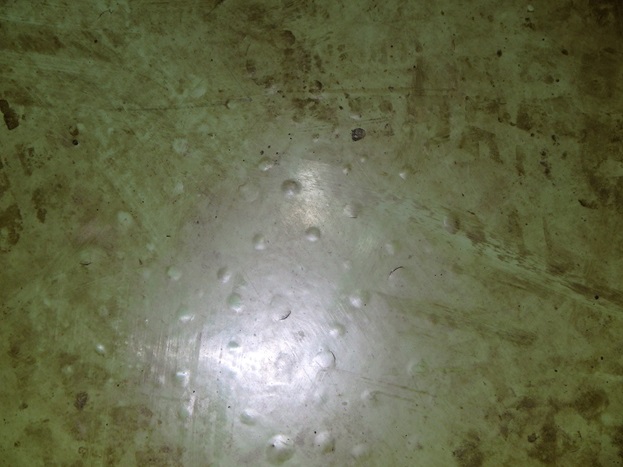
The paint blisters and peels off after only a short time. The blisters in both cases indicate that there has been salt contamination under the paint. In the first photo, where the loose paint has been pried off, it is also evident that the surface has only been superficially sandblasted and that the mill scale is partially intact.
Recommendations
To help prevent disputes and ensure your item achieves the required durability, you should use standards to make your paint specification as precise and detailed as possible to avoid misunderstandings. You must specify which requirements the design and corrosion protection of the item place on the manufacturer and the painter, respectively. As seen above, the paint specification should as a minimum include a corrosion category and a durability in accordance with DS/EN ISO 12944.




Reach out to Nana Eckhardt for more information.