
Cases
Methanol handling course improves safety for technicians at Nordhavn Power Solutions A/S
Challenge
The technicians at Nordhavn Power Solutions A/S needed a methanol handling course to prepare them to service methanol engines worldwide.
Solution
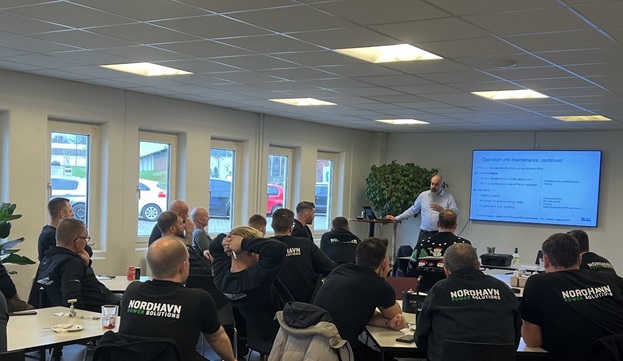
FORCE Technology tailored a course providing a solid understanding of handling methanol, including related health and safety risks.
Result
The technicians were upskilled in the safe handling of methanol, and now feel secure and prepared adequately for their work.
The Nordhavn Power Solutions A/S technicians now understand how to approach safety and manage risks when working with methanol on-site.
Given the pace of developments in Power-to-X and e-fuels, including hydrogen and methanol, today's technicians face different challenges than their predecessors. For instance, an increasing number of ships now sail on methanol, meaning technicians must take other precautions and follow different safety rules.
Upskilling in methanol handling
Nordhavn Power Solutions A/S wants its technicians to always be as well-equipped as possible to perform their work safely and responsibly. To that end, the company was searching for a methanol handling course. "Working with methanol is a relatively new thing for our company, so we need to know how our technicians should handle methanol across their various tasks. This is why we were searching for a course to provide greater awareness of the safety considerations in handling methanol," explains Lone De bruyn, a back-office service assistant at Nordhavn Power Solutions A/S. "I contacted FORCE Technology, and they tailored the perfect course to help us ensure our technicians are as prepared as possible."
Our technicians can work more safely now, because they know what kinds of gloves they need to use, what to do if they get methanol on their skin or swallow it, and so on, They also know always to bring non-sparking tools to minimise the fire risk.
Stricter safety requirements for methanol
Technicians must be prepared for four contact scenarios when working with methanol.
The contact scenarios for methanol are:
- inhalation of methanol vapour
- ingestion of methanol
- methanol in contact with skin
- methanol in contact with the eyes.
"Our technicians can work more safely now, because they know what kinds of gloves they need to use, what to do if they get methanol on their skin or swallow it, and so on," says Lone De bruyn. "They also know always to bring non-sparking tools to minimise the fire risk.
This is really helpful for our technicians, and they feel safer knowing that they have the right equipment on board when working on these ships."
Risk assessment for all methanol-related jobs
The technicians have now learned which methods and tools to use for a risk assessment before beginning any job. They also have greater insight into the regulations and standards that apply to methanol work.
This way, they can ensure they have the equipment to handle any situation.
Real-world case studies in methanol handling
Learning theory in a classroom is one thing, but solving real-world problems related to methanol handling is another.
"The best thing about the course was the opportunity to discuss different case studies in groups. That left our technicians even better prepared, so they can now feel completely secure when performing jobs that involve methanol handling", concludes Lone De bruyn at Nordhavn Power Solutions A/S.





Reach out to Lars Nøhr-Nielsen for more information.