
Review of welding plans, welding procedure specifications (WPS), procedure qualification records (WPQR) and related work procedures to ensure they match project requirements and applicable standards.
Welding technologies
Welding inspection
Verify weld quality, workmanship and compliance through independent welding inspection.
Manufacturers and contractors producing welded structures must ensure that weld quality, procedures and workmanship meet defined standards throughout fabrication. In practice, busy production environments, multiple welders or subcontractors and incomplete documentation make it difficult to maintain consistent quality and verify compliance.
Systematic follow-up on the welding process
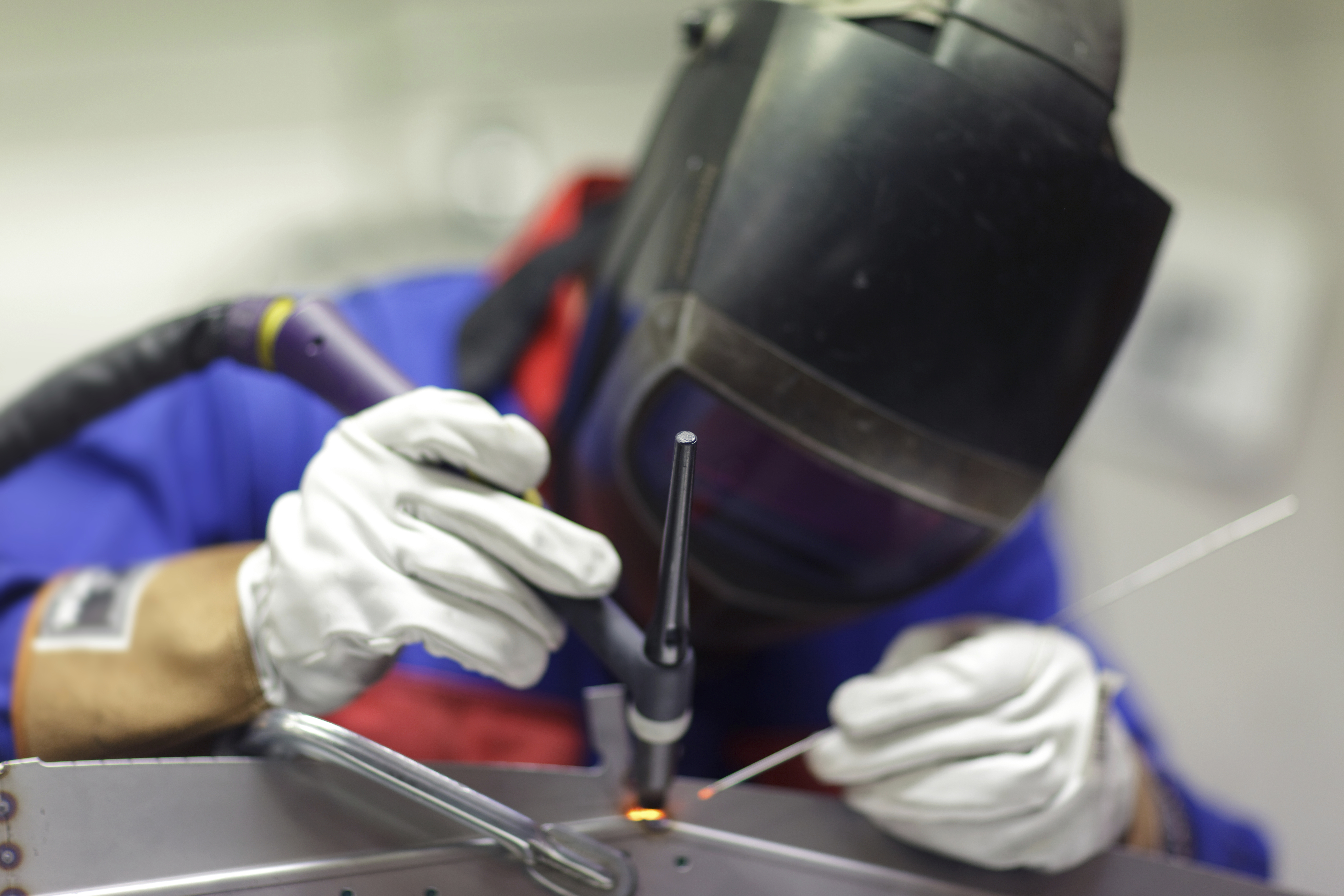
Welding inspection supports control of the welding process by reviewing welding plans and procedures, checking joint preparation and monitoring that parameters and workmanship remain within approved limits. Finished welds are assessed through visual inspection and documentation review, enabling early detection of deviations, reduced rework and reliable delivery of welded components that meet technical and contractual requirements.
Challenges
When welding quality is not consistently verified, quality issues and delays follow
Inconsistent verification undermines weld reliability
When weld quality is not consistently checked across shifts and subcontractors, compliance becomes uncertain and defects surface late.
Uncontrolled procedures allow deviations to pass unnoticed
When welding procedures are not followed or properly documented, process deviations go undetected and quality assurance weakens.
Unclear readiness increases production risk
When welder qualifications, equipment condition or joint preparation are not verified, production starts without confidence in capability or consistency.
Weak documentation delays approval and audits
When inspection records and welding documentation lack detail or accuracy, reviews slow down and third-party acceptance is delayed.
Benefits
Replace uncertainty with evidence to keep projects on track
Improved weld visibility, faster problem resolution
Early detection of deviations provides a clearer view of weld quality, enabling quick corrections and preventing issues from escalating.
Reliable documentation, smoother audits
Consistent welding records create traceability, making compliance checks more predictable and reducing the time spent resolving gaps.
Independent verification, fewer project disruptions
Impartial oversight gives a trustworthy status of welding progress, lowering the risk of late-stage surprises that delay fabrication.
Validated critical welds, stronger confidence in performance
Inspection of safety-critical joints provides assurance that welded structures meet the required integrity before proceeding.
Need guidance on welding inspection?
Let’s make sure your welding work is inspected at the right level, at the right time. Share a few details about your project, and we’ll help you clarify inspection needs, requirements and next steps before quality issues or delays arise.
Service scope
Key elements of welding inspection
Standards
Frameworks and qualifications that underpin reliable welding inspection
Related services
Inspection and non-destructive testing (NDT)
Manufacturing process monitoring with NDT
Inspection and non-destructive testing (NDT)
Pressure equipment inspection & assessment
Inspection and non-destructive testing (NDT)
In-service ammonia storage tank inspection
Inspection and non-destructive testing (NDT)
Condition monitoring with NDT




Reach out to Peter Villumsen for more information.