
The short version of the history behind Digital Radiography (DR) is that research in the area started in the 1970s. In the early 1980s, the use of CR with imaging plates was introduced in the healthcare sector.
In 1987, DR was introduced to dentists, and throughout the 1990s the quality of imaging plates improved and the range of applications expanded. By the early 2000s, most players in the healthcare sector had abandoned film radiography in favor of DR.
Due to improved quality, the potential for CR in industrial radiography became increasingly relevant. The equipment was gradually adapted for industrial use, but costs and the quality of imaging plates and scanners remained a barrier. Around 2010, however, both equipment and image quality were good enough to be used for most welded constructions and corrosion control. During this period, Direct Digital Array (DDA) equipment also became available for industrial applications.
This laid the foundation for the NDT industry in Norway, from 2010 until today, to replace much of traditional film radiography with digital radiography. It started mainly with corrosion control in operational inspection offshore, but in the past 5-6 years, parts of weld inspection have also been replaced by CR. In recent years, some players have also started to use DDA for weld inspection, which is likely to continue to develop in the coming years.
This brief historical overview shows that the development of new NDT equipment requires patience and effort from many stakeholders. Financial motives and environmental considerations have influenced the changes within industrial radiography, but an important barrier has been the development of international standards and, not least, strict requirements for image quality in weld inspection.
RTD in Norwegian industry
When the equipment came on the market, several of the major players saw its potential, as they had large volumes and high film expenses. A digital solution could eliminate both film usage and chemicals, and environmental considerations and space savings also played an important role.
The challenge, however, was that the image quality balanced on the edge of what was commercially acceptable for weld inspection. In practice, the only commercial use of RTD was therefore for corrosion control. Thus, operational inspection and on-stream corrosion control led the way in using RTD. Several major oil companies invested in scanners and imaging plates, thus reducing film and chemical consumption on platforms.
Along the way, several attempted to use the same system for weld inspection, but it was not automatically accepted. In 2013, EN-ISO 17636-2 was introduced, setting the framework for weld inspection using RTD, and thereby CR and imaging plates became an acceptable alternative to radiographic films. However, it required proper use and that it was applied to the correct dimensions with the right radiation source. CR was still challenging on thin wall thicknesses, and quality requirements, measured with SRbdetector, SNRN, and sensitivity, had to be met.
DDA, on the other hand, had a somewhat longer route before being recognized for weld inspection. Even today, it is expensive to buy equipment suitable for wall thicknesses below 4 mm, and DDA should preferably be combined with X-ray equipment with a small focal spot (b < 1 mm). This requires thorough assessment of needs and application before investing in DDA.
Equipment
With EN-ISO 17636-2:2013, a framework was established, giving the industry the opportunity to consider switching from RTF to RTD. From about 2010, equipment also improved steadily, and especially CR could be used for most dimensions in weld inspection. However, price sensitivity remained, and equipment costing between NOK 500,000 and 1,000,000 requires a certain volume before it is economically viable for industrial use.
It was primarily the largest players in weld inspection who took the lead in replacing RTF with RTD. CR was introduced at several shipyards and has gained increasing importance in the industry. Since around 2015, more smaller inspection companies have adopted CR, and in the past 5-6 years, CR has become a real competitor to RTF even for players with medium volumes.
DDA, however, has struggled to gain market share due to high investment costs for sensitive equipment. In addition, there are still some limitations on use with the smallest dimensions/thicknesses, and X-ray tubes with a small focus are still preferably needed to achieve sufficient image quality. However, DDA is becoming an attractive alternative to both film and CR, particularly when used together with X-ray tubes with a small focus (<1 mm).
Today, CR combined with X-ray tubes is a good and well-tested alternative to RTF, and it mainly requires a practical/economic assessment by the user. DDA is also an alternative to RTF and CR as long as you make the right assessments regarding application, economics, choice of DDA panel and X-ray tube, and understand what is required to achieve correct image quality.
Courses
Until 2022, there have been no courses and certification offered within RTD in Norway. There have also not been clear requirements for accredited NDT certificates in RTD in legislation or Norsok, as the development of these standards often lags behind equipment development.
However, there have been clear requirements for education and qualification in the EN-ISO 17636-2 standard since 2013. The standard clearly states that persons working with RTD must be able to document that they have undergone training and qualification in RTD. Until now, this has been resolved with courses from equipment suppliers, some courses abroad, or internal company training.
Furthermore, the 2022 edition of ISO 9712 added an annex with tables of course requirements for different techniques. In EN-ISO17636-2:2022, it is now required that training of RTD personnel follows ISO/TS25107, which has a detailed description of the content of an RTD course.
Regardless of the course solution, it is extremely important that everyone working with RTD receives thorough education on the complexities surrounding RTD and can document their competence. In particular, Norsok has increasingly moved towards certification and today requires education and certification in UT of austenitic materials. The consultation draft for the next version further requires training and certification in PAUT. The complexity surrounding RTD means we also expect Norsok to require certification here.
Therefore, it is very important that everyone wishing to deliver RTD to the market develops a course and certification plan for their employees to avoid problems if something unexpected happens. RTD is complex, and there are many possibilities for errors, and good competence will reduce the risk of compensation claims due to image quality or defects not being detected.
FORCE Academy has, over the past six months, developed a course within RTD Level 2 covering both CR and DDA. FORCE Certification has developed an exam and can now offer accredited certification within RTD. There is now finally formal training following ISO/TS25107 and an accredited exam and certification complying with ISO 9712.
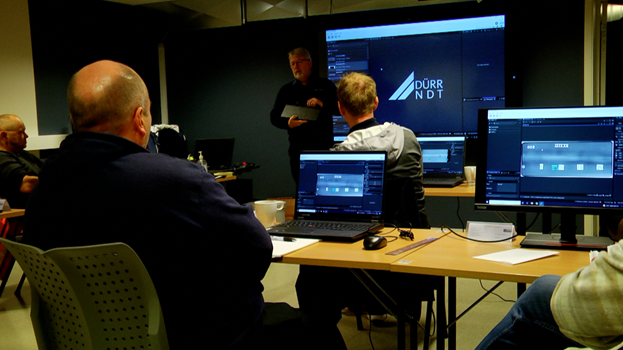
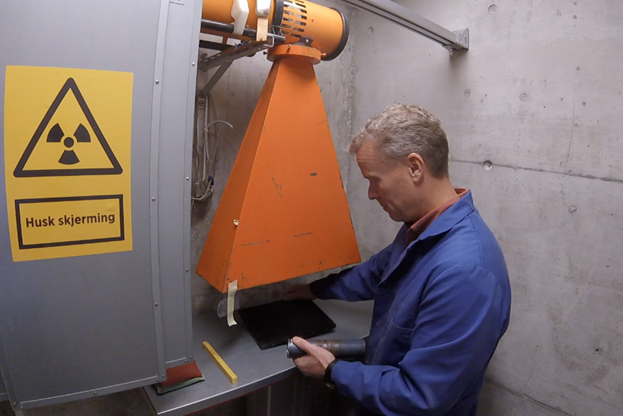
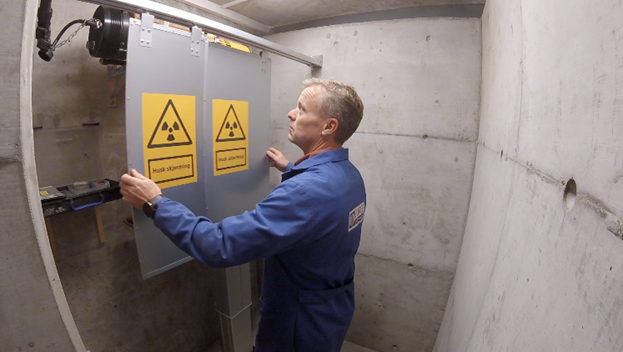
The course is designed for people who already have RTF Level 2, and includes 3 days of digital learning (which can be taken from home with support from an instructor) and then 5 days of teaching and training in Kristiansand. We have invested in brand-new facilities that are highly suitable for an RTD course for 8 participants per group. Participants have access to 4 complete X-ray stations that can be used simultaneously. These are connected to two complete CR systems and one complete DDA system. This, combined with 8 software licenses, allows us to arrange the course with optimal distribution of group and individual training.
The first course was held in October with 7 participants, and the December course is fully booked. Three new courses will be held until summer, and we see that more in the industry are seeing the need to educate their NDT technicians within RTD.
Certification
The exams are based on the framework of ISO 9712 and comprise a combination of theoretical and practical tasks. The theoretical part consists of 20 multiple-choice questions (1 hour) as well as the preparation of an instruction (1.5 hours). The practical part comprises 2 technical assessments (for both CR and DDA, 2 hours) against EN-ISO 17636-2 and two complete exposures with both CR and DDA against the same standard (2 hours).
The requirement to pass is a minimum of 70% on all parts. When this is passed, a certificate is issued for the RTD technique, which is linked to the candidate's RTF certificate.
The technical certificate follows the method certificate and is valid as long as the main certificate is valid. This is because the techniques do not provide sufficient film evaluation and therefore rely on certification in film evaluation from the main certificate.
The way forward for RTD
The industry is now at a crossroads where RTD is a real competitor to RTF. This means that more and more will gradually choose RTD over RTF. Thus, courses within RT will shift from RTF as the standard before 2022 to RTD as the standard from around 2024. In 2023, we will see a transition period where many with RTF Level 2 build further with RTD Level 2.
How long it will take before RTD becomes the standard certification and RTF becomes optional is hard to say. FORCE Academy will closely follow the industry in the coming years and, of course, adapt this according to the needs and wants of our customers.
The history of RTD confirms that "things take time," and the reasons are many. Image quality, standardization, economics, and a certain industry skepticism mean that the market does not necessarily embrace new technologies quickly. CR and DDA were introduced as alternatives 10–15 years ago, but only in recent years have these techniques been in position to be genuine challengers to RTF in industrial radiography.



Reach out to our expert Andreas Loland for more infomation.