
Articles
Operational experience with green fuels such as methanol and ammonia in dual-fuel ship engines
International shipping is working towards being CO2-neutral by 2050, and preliminary operational experience with methanol and ammonia as green fuels in dual-fuel engines so far shows promising results.
The green transition also concerns shipping, as the UN's maritime organization IMO has set the goal that international shipping must be CO2-neutral by 2050. IMO has also set milestone targets to achieve CO2 reduction by 20% and 70% in 2030 and 2040, respectively.
In the last 10 years, there has been increasing focus on alternative green fuels, including e-fuel, which led IMO in December 2020 to issue interim guidelines that resulted in “MSC. 1/Circ. 1621” concerning methyl/ethyl alcohol (methanol) used as ship fuel, covering engine room layout, tanks, and bunkering station.
Advantages and disadvantages of alternative green fuels in shipping
Several new green fuels have been considered as replacements for fossil fuels to comply with IMO requirements.
The most promising are:
- Methanol
- Ammonia (NH3)
Methanol
Methanol is relatively easy to handle, and operational experience has shown that engine crews quickly adapt to its operational mode when the necessary precautions and procedures are integrated into their daily routines.
Additionally, methanol has shown several advantages, such as faster combustion (heat release relative to crank angle), which is a key parameter to achieve good cylinder condition, improved specific fuel consumption and thermodynamic efficiency, lower NOx emissions and exhaust gas temperature.
Ammonia
There is no CO2 emission from using ammonia in shipping, but NOx is emitted during combustion. It is highly aggressive towards copper alloys and is explosive. Its boiling point is -33°C, so it must be stored under pressure or kept refrigerated.
Moreover, it is very toxic even in small concentrations, requiring significant safety precautions onboard and during bunkering operations.
The calorific value is about half of that of fossil Heavy Fuel Oil (HFO).
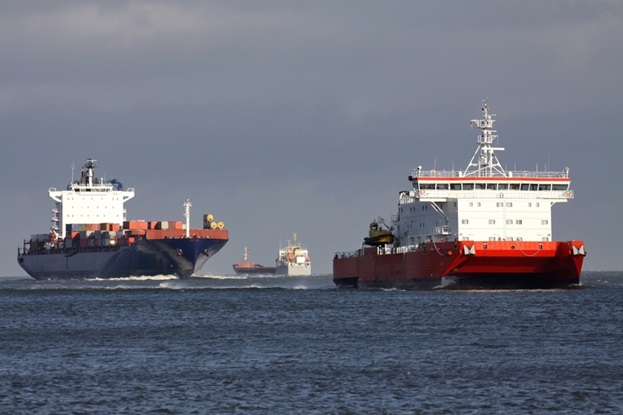
Metanol er indtil videre et godt bud på et grønt brændstof, der kan hjælpe skibsfarten med at blive CO2-neutral.
Other alternative green fuels include biofuels, e-fuels, and hydrogen
Biofuels typically have a lower calorific value compared to fossil fuels. There can also be challenges with bacterial growth, limited shelf life during storage, and wax formation, which can degrade rubber/polymers. Greenhouse gases can be reduced by approximately 40%, while NOx emissions can increase.
E-fuels are liquid or gaseous fuels produced using surplus green electricity from wind turbines, hydropower (nuclear power), and solar energy. Hydrogen can also be produced from surplus green electricity but cannot be used directly in an engine (due to explosion rather than combustion) and is more difficult to handle compared to ammonia.
Operational experience with dual-fuel (gas and) methanol engines shows positive trends so far
Methanol is currently considered the most obvious solution, as it is technologically available, relatively safe, easy to handle, and is in liquid form at atmospheric pressure (unlike gas and ammonia).
It has been shown that methanol operation positively influences specific fuel consumption and thermodynamic efficiency.
There are still not many ships that can run on new and green fuels. Existing ships must either be retrofitted, or entirely new ships must be built. The major shipping companies and engine manufacturers are mainly proceeding with methanol and ammonia engines, and so far, there have not yet been published operational experiences (wear data) from methanol engines.
Ship engine manufacturers continue to develop and test engines for ammonia (the first 2-stroke ammonia engine will not come into operation until 2026) and methanol, and it will be interesting to follow the operational experiences.
Challenges with gas, methanol, and ammonia as green fuels in dual-fuel diesel engines
Even though there is good operational experience with methanol, it is not yet a perfect solution. Methanol is still significantly more expensive than HFO, and production capacity is still far from the level needed to meet the future demand for green shipping.
When methane gas is used, a small part escapes in the exhaust – the so-called methane slip – which is problematic since methane is a greenhouse gas considered to have a much greater negative environmental impact than CO2.
The new green fuels generally have much lower energy density compared to conventional fossil fuels. This means that larger fuel tanks may be needed, which can affect payload and the design of hulls and superstructures/accommodation.
Moreover, the necessary infrastructure such as bunkering facilities in ports worldwide is far from ready. So, in addition to ships needing to be either converted or newly built, logistics must also be in place to achieve IMO’s goal of CO2-neutral shipping by 2050.


Reach out to Jens Thomsen for more information.